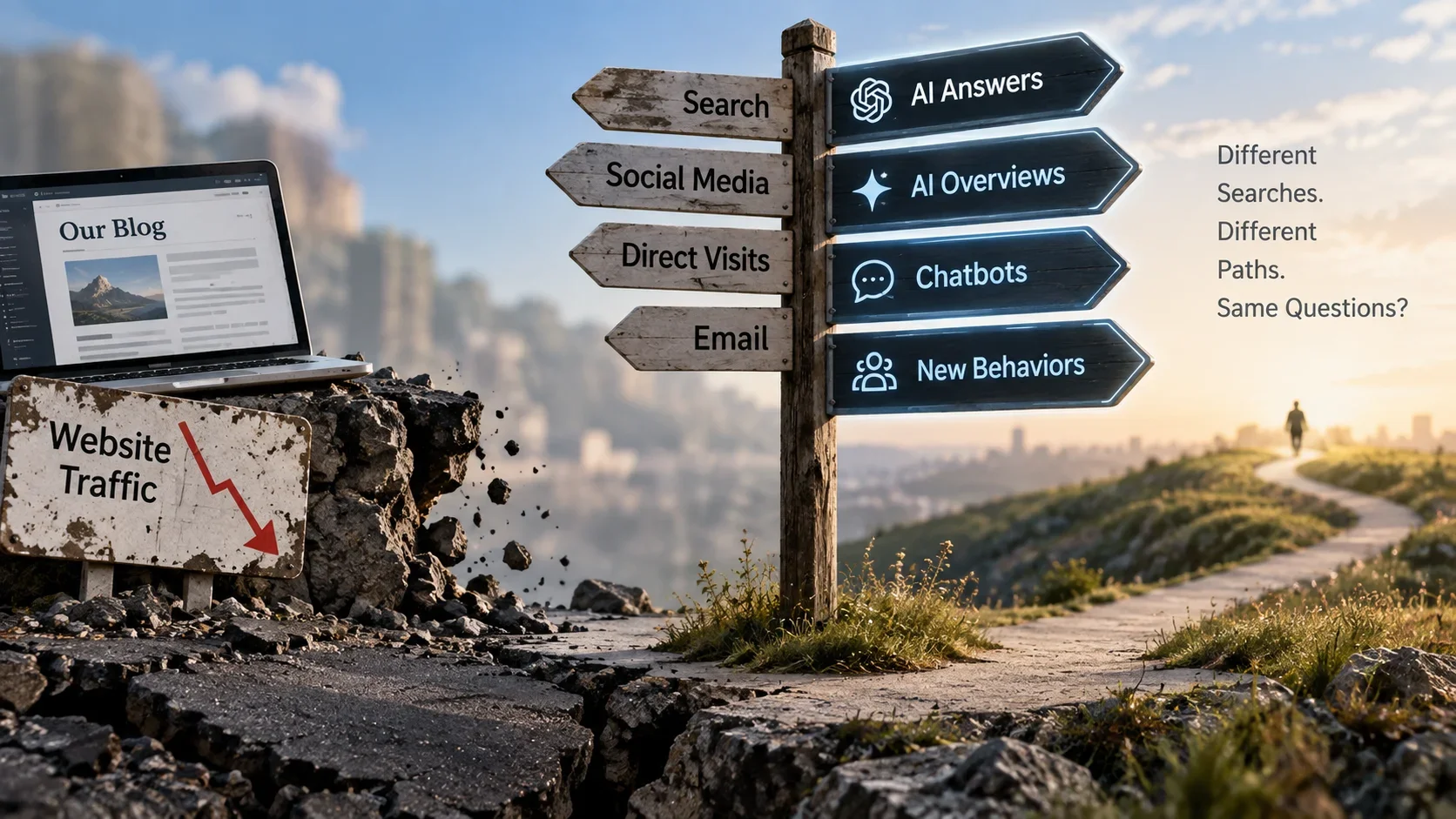
In his explanation of HubSpot’s widely reported traffic decline, Kipp Bodnar argues that the “lost 80%” story mistakes a strategic change for a collapse. HubSpot had already moved from broad informational publishing toward influence across video, podcasts, newsletters, social media, and its acquired media properties. AI answers then reduced clicks further, while transactional search remained healthy. His prescription is to publish distinctive, expert-backed work, become visible to both people and language models, and keep investing in searches close to a purchase.
The diagnosis gets an important point right: page views were never a complete measure of business value. A smaller audience with stronger purchase intent can be worth more than millions of casual visits, and generic articles have become easier for search engines and AI systems to summarize without sending anyone to the publisher. Treating every traffic decline as a business failure would be as crude as treating every traffic increase as success.
But the article moves too quickly from “traffic is incomplete” to “influence is working.” Influence is an attractive explanation precisely because it can absorb almost any outcome. A years-long customer story and growing appearances in AI answers may illustrate reach, but neither shows whether the new mix produces more qualified demand, stronger preference, lower acquisition costs, or greater revenue than the traffic it replaced. If traffic is a vanity metric, the answer is not a metric that is harder to audit.
The distinction between a planned retreat and an externally imposed loss also needs evidence. HubSpot may have started changing its strategy in 2020, yet an earlier strategic shift does not tell us how much subsequent traffic decline was intentional, anticipated, or economically harmless. The useful comparison would separate pages deliberately pruned from pages that lost visibility, then trace what happened to conversions, assisted pipeline, branded search, direct visits, and customer acquisition. Without that comparison, foresight and hindsight are too easy to blend.
The advice is also less portable than it sounds. HubSpot can distribute ideas through a large installed customer base, an academy, prominent executives, multiple shows, newsletters, and The Hustle. A smaller company cannot merely swap search traffic for “influence.” It must choose which audience, channel, and proof of expertise justify scarce production and distribution resources. “Create something AI cannot” names the ambition, not the operating model.
Visibility inside an AI answer creates another measurement problem. Being cited is not the same as being remembered, preferred, visited, or purchased. An answer engine can extract a publisher’s useful knowledge while removing the context and journey that once exposed readers to the brand. Some citations will matter; others will be little more than invisible supply. Marketers need to test whether that visibility changes branded demand, consideration, assisted conversions, or sales conversations—not assume that reference status is influence.
Even the reassuring strength of transactional SEO deserves caution. If informational discovery contracts, competition around the remaining high-intent searches may intensify, and fewer buyers may encounter a brand before they reach the shortlist. Bottom-of-funnel performance cannot be treated as independent of the education and familiarity built earlier.
The better addendum is to demote traffic without dismissing it. Keep clicks as a diagnostic, then judge the replacement strategy with a portfolio of commercial and audience measures: qualified demand, direct and branded behavior, subscriber quality, sales influence, customer acquisition economics, and credible incrementality tests. Fewer clicks can be a rational trade. Until the value received in exchange is demonstrated, however, they are evidence of less distribution—not proof of greater influence.